Social media management is the process of creating, publishing, managing, and analyzing content on social media platform like Instagram, Facebook, and YouTube. social media management means overseeing every aspect of a brand’s social presence, from content planning and publishing to customer care, analytics and community building, within a centralized workflow that drives measurable business impact. The brands winning on social aren’t just posting content. They’re building integrated strategies that connect audience insights to business decisions, turning every interaction into an opportunity to grow.Social media management is the ongoing process of creating, publishing and analyzing content- alongside customer care, community building and performance reporting- to grow a brand’s impact on social media. Social media management has expanded far beyond publishing and community management. The creator economy has transformed how brands show up on social, and the rise of social messaging has shifted conversations from public feeds to private channels, depending the relationship between people and the brand they follow. Key skills of a social media managerBeing a social media manager isn’t just about posting content — it’s about strategy, engagement and staying ahead of the game. From crafting viral posts to analyzing performance, they wear many hats. Here are the key skills that make a great one:Content creation & curation: Crafting engaging text, images and videos that align with the brand’s voice.Community engagement: Responding to comments, messages, and trends to build meaningful relationships.Analytics & performance tracking: Measuring reach, engagement and conversions to optimize strategies.Social listening & trend spotting: Monitoring brand mentions and industry shifts to stay ahead.Strategic planning & execution: Aligning social efforts with business goals for measurable impact.Platform expertise: Understanding the nuances, algorithms, and best practices of different social media channels.Crisis management: Handling negative feedback, PR crises and brand reputation challenges with tact and speed.Social media management is the practice: planning, publishing, engaging, and measuring. A social media management platform is the software that runs all of it in one place, replacing separate tools for scheduling, inbox, listening, and reporting.
PAID ADVERTISING
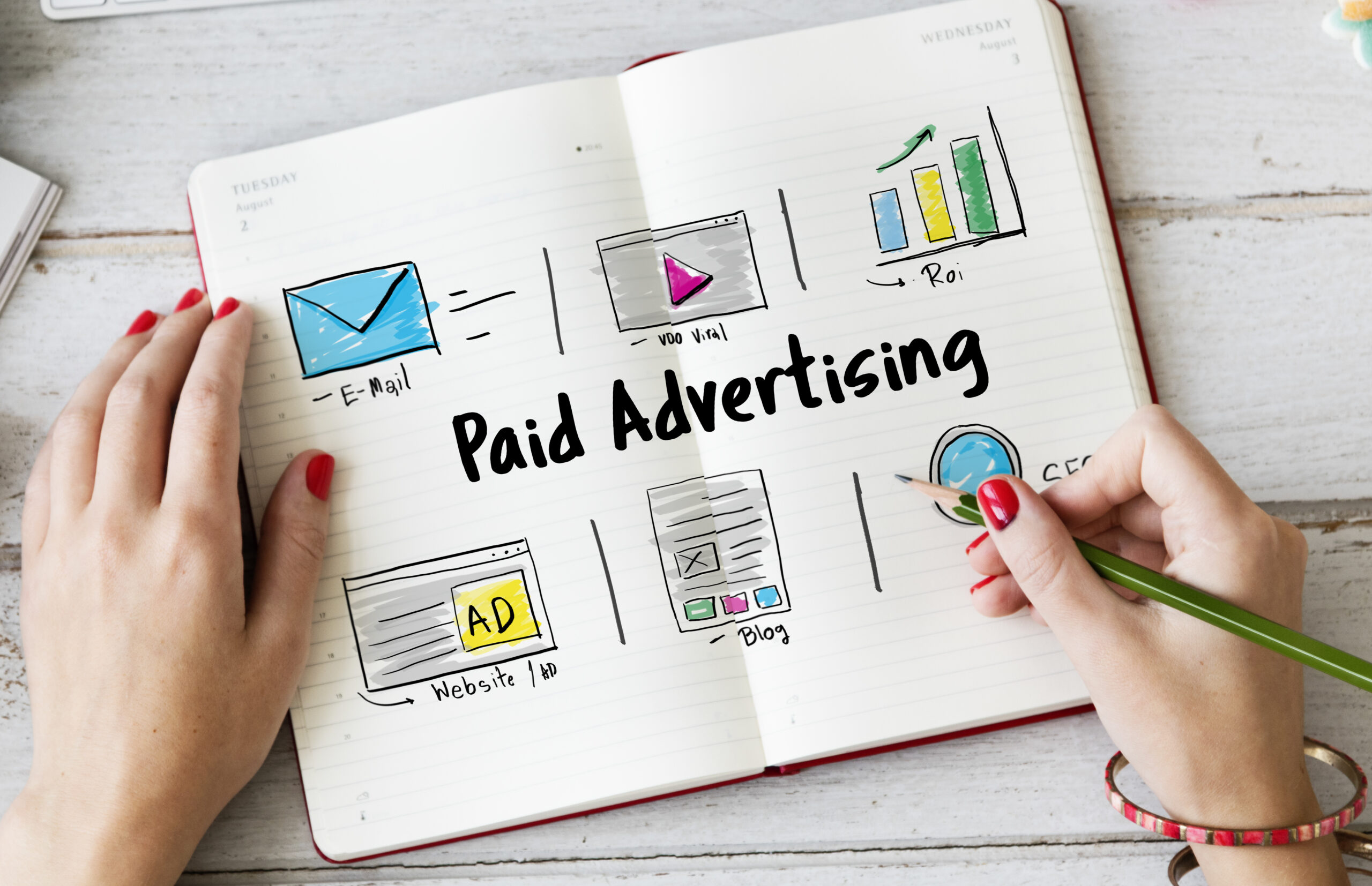
Paid advertising is a broad term for any ad campaigns in a marketing strategy that are promoted with paid auctions, bids, or placements. They can be displayed alongside linear or digital content, including videos, articles, or social media.Paid advertising is an option in the landscape of brand marketing. It can include everything from the banner ads on websites to the “sponsored” posts you scroll by on Instagram to the video commercials interspersed in your must-watch sports games. With such a wide variety of options for paid advertising, it can be challenging for brands to choose where to start. Another equally important benefit is engagement. Paid advertising can help put your ads in front of the audiences who are most likely to respond to it, boosting engagement and you conversion rate. +Paid advertising refers to any marketing effort where advertisers pay a fee to place their ads on specific platforms, reaching their desired audience. Unlike organic methods, where businesses rely on free tactics to get visibility, such as search engine optimization or organic social media posts, paid advertising guarantees placement in exchange for payment.Best Practices for SaaS Paid Advertising :Understand Your Audience: For SaaS companies, it’s essential to identify and target the decision-makers within an organization.Offer Value Upfront: Free trials, demos, or educational webinars can lure potential customers.Highlight Unique Features: Differentiate your software from competitors by emphasizing what makes it unique.Test Continuously: Regularly A/B test your ad copy, design, and landing pages to determine what resonates best with your audience.Optimize for Mobile: Ensure that ads and landing pages are mobile-friendly, considering the significant number of users browsing on mobile devices. Paid advertising is a powerful tool in the arsenal of modern businesses, SaaS included. By paying for visibility, companies can ensure that their products or services get in front of the right eyes, at the right time. With careful strategy, continuous testing, and diligent measurement, SaaS businesses can see a significant return on their advertising investment, driving growth and profitability.

LEAD GENERATION
Lead generation is the process of building interest in a product or service and then turning that interest into a sale. Lead gen makes the sales cycle more efficient because it focuses on the strongest and most valuable prospects. The result is greater success in new customer acquisition and conversion rates.The lead generation process begins with creating awareness and interest. You can start by publishing blog posts that educate your audience and engaging users through social media. You capture potential leads through sign-ups in which a person voluntarily gives you contact info to stay in touch.Lead generation is also important for ecommerce and other businesses, as email marketing is still one of the most effective channels for marketing online, and gathering a prospective customer’s contact info allows the business to market to them later, even if they do not make a purchase immediately. Here are common marketing strategies businesses leverage to generate leads:Content: Providing high-quality content in exchange for contact information is a common practice in lead generation. This content can be anything from a white paper, case study or infographic to an ebook or exclusive video. The idea is to entice potential customers in your target audience with a piece of content that is relevant to your business and require them to provide their contact info before they can get access to the content.Webinars: A webinar is a live video session that your visitors can view and participate in. Webinars typically last between half an hour to an hour and provide information and educational material about a specific topic. Because webinars are interactive and require a big investment in time, they can be a great way to not only create a lead but also to educate and convert them.Landing pages: The best lead generation tool of all is your product. If you have a compelling product that solves a major pain point, visitors will want to provide their contact information even without any incentives. Presenting your product in the most attractive way is often done through landing pages or sales pages, which help educate and convert prospective customers.After a lead has been nurtured, a prospect can be convinced to make an inbound purchase on the website or by reaching out to a salesperson, turning them into a sales qualified lead. In enterprise sales, it is often the sales team that reaches out to the prospect to close the deal. Lead generation in digital marketing is the process of attracting potential customers through online channels and capturing their information to turn them into qualified leads.It involves using digital marketing strategies such as search engine optimization (SEO), social media marketing, paid ads, email campaigns, and content marketing to generate leads and move them through the sales funnel.Businesses collect user information through landing pages, lead forms, gated content, or referral offers when users show interest in their products or services. These individuals are considered potential leads and can be nurtured into customers over time.

VIDEO MARKETING
Video marketing is a strategic and effective technique within the digital marketing world. By creating and utilizing captivating videos, businesses can effectively showcase their product, service, or brand. This approach leverages the power of visual content to captivate and connect with the desired audience, making it an impactful tool in marketing resources.Video marketing is an ingenious method that harnesses the impact of video content to skillfully convey messages, captivate viewers, and advertise products or services in the ever-changing digital realm. In today’s fast-paced world, where people have short attention spans and there is fierce competition for their attention, video marketing has emerged as a powerful tool for both enterprises and individuals. This innovative approach to marketing goes beyond the conventional methods of advertising, providing a wide variety of content to engage with. Through captivating promotional videos, products come to life. Informative tutorials not only educate but also empower viewers. And with the ability to live stream, businesses and creators can foster real-time interaction with their audience. With the help of the widespread availability of top-notch recording equipment and the growing number of social media and video-sharing platforms, the possibilities for connection between businesses and their target audience have multiplied. Video marketing is a powerful tool that allows creators to craft compelling stories, unleash their creativity, and build genuine connections with viewers – a feat that traditional methods often struggle to achieve. Its flexibility enables a diverse range of content styles, making it ideal for personalized and impactful communication. Whether you’re an experienced marketer looking to enhance your tactics or a newbie keen to explore the power of visual storytelling, video marketing offers an immersive and effective means of leaving a lasting impression in the digital world. Importance of Video Marketing1. Increased Involvement: The impact of videos is second to none when it comes to captivating an audience. The combination of dynamic visuals and auditory elements makes for an engaging experience that text or images simply cannot match. As a result, videos are able to effortlessly hold the attention of viewers at a much higher level than any other form of media.2. Rise in Conversions: Video content possesses the immense capability to sway buying choices. When products or services are featured in videos, particularly through live demonstrations or reviews, they have the potential to greatly increase conversion rates by offering a captivating and convincing encounter.3. Enhanced Recognition of the Brand: Utilizing video marketing can have a significant impact in boosting brand visibility. By creating compelling and easily shareable videos, a brand can successfully reach a larger audience and leave a lasting impact, ultimately leading to enhanced recognition.4. Improved Complex Information Communication: Using videos is a powerful and effective way to showcase intricate ideas or showcase products. They facilitate a seamless and compelling delivery of information, enabling the audience to grasp it effortlessly.5. Worldwide Reach: The internet has made it incredibly easy to share and view videos across the globe. As a result, businesses and creators are able to reach a broad and diverse audience, greatly expanding their market potential.6. Improved User Experience: Integrating video content into websites or marketing campaigns significantly elevates the user experience, elevating its overall appeal. This approach truly captivates and engages users by offering a dynamic and entertaining medium to absorb and interact with information, effectively prolonging their stay on the platform.7. Versatility and Adaptability: Video marketing offers a wide range of content options, catering to promotional videos, tutorials, live streams, and more. This flexibility enables imaginative storytelling and customized content that meets diverse marketing objectives and caters to the audience’s preferences.
AFFILIATE MARKETING
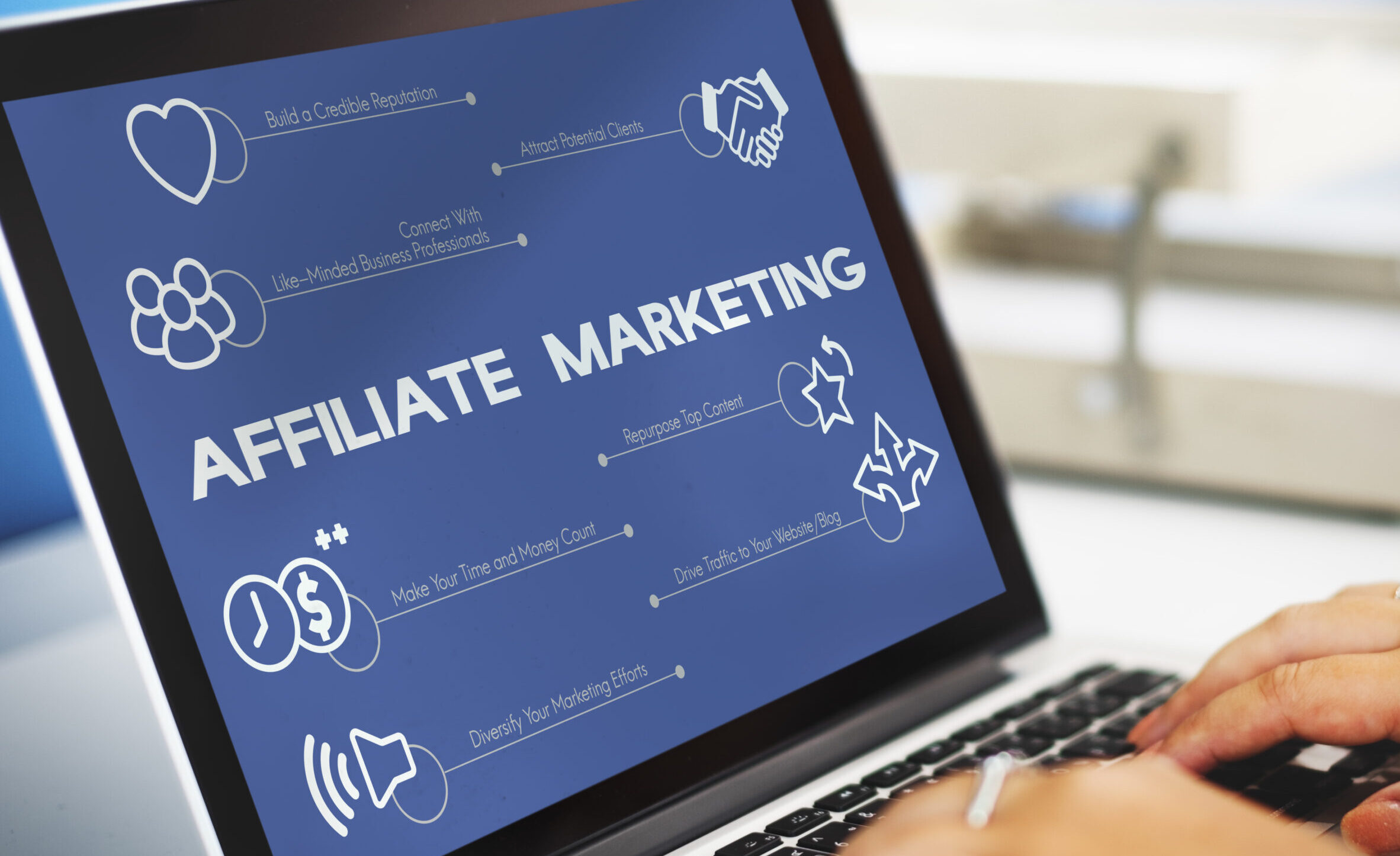
Affiliate marketing is a performance-based arrangement in which a business pays third parties a commission for generating sales or other desired customer actions. Affiliate marketing is an advertising model where a company compensates third-party publishers to generate traffic or leads to the company’s products and services. The third-party publishers are affiliates, and the commission fee incentivizes them to find ways to promote the company. There are three main types of affiliate marketing: Unattached Affiliate Marketing: This is an advertising model where the affiliate has no connection to the product or service they are promoting. They have no known related skills or expertise and do not serve as an authority on or make claims about its use. This is the most uninvolved form of affiliate marketing. The lack of attachment to the potential customer and product absolves the affiliate from the duty to recommend or advise. Related Affiliate Marketing: As the name suggests, related affiliate marketing involves promoting products or services by an affiliate with some type of relationship to the offering. Generally, the connection is between the affiliate’s niche and the product or service. The affiliate has enough influence and expertise to generate traffic, and their level of authority makes them a trusted source. The affiliate, however, makes no claims about using the product or service. Involved Affiliate Marketing: This type of marketing establishes a deeper connection between the affiliate and the product or service they’re promoting. They have used or currently use the product and are confident that their positive experiences can be shared by others. Their experiences are the advertisements, and they serve as a trusted source of information. On the other hand, because they’re providing recommendations, their reputation may be compromised by any problems arising from the product or service. Affiliates are the marketers. They promote the seller’s product to their audience in an engaging way. The goal is to persuade potential customers that the product is valuable and worth purchasing. When a sale occurs through their unique affiliate link, the affiliate earns a commission. Many affiliates focus on a niche. This specificity allows them to build a highly targeted audience interested in particular types of products, increasing the likelihood of successful conversions. Most affiliate marketers operate a website or multiple websites. There are plenty of other digital marketing channels and platforms where you can promote your affiliate activity. However, if you are just starting out, you might want to invest the time in creating a website. It can serve as a central platform to work on your performance marketing skills while slowly building an income stream. Further down, we’ll explore in-depth details about building an affiliate website.

EMAIL MARKETING
Email Marketing involves using email to promote products or services, encourage customers loyalty, and keep customers informed about new offerings. It helps build relationship, drive traffic, allows segmentations, and supports A/B testing for message optimization. Email Marketing is the use of email to promote products or services, as well as incentivize customers loyalty. It is a form of marketing that can make the customers loyalty. It is a form of marketing that can make the customers on your email list aware of new products, discounts, and other services. Email marketing is one of the most effective and popular marketing tools. Email marketing is a form of digital direct marketing that uses email to promote a company’s products or services. By integrating email marketing into marketing automation, companies can inform customers who have explicitly opted in to receive such emails about the latest products or offers. A key advantage of email marketing is the ability to accurately measure coasts and revenue . Email marketing can also play a central role in a marketing strategy focused on lead generation, brand awareness, relationship building, or customer retention between purchase through various types of marketing emails. Email has become such a popular marketing tool for businesses partly because it forces the user to take some kind of action ; an email will sit in the inbox until it’s read , deleted, or archived.
META ADS
Meta ads refer to the advertising solutions that Meta Platforms Inc. offers. This includes ads across all Meta technologies (Facebook, Instagram, Messenger, Threads, and to some extent, WhatsApp). These ads help you target specific audiences based on different criteria like demographics, interests, behavior, and even your own CRM segments. Meta Ads Manager groups ads into a few core creative formats: Flexible, Single image or video, Carousel, and Collection. These are the main top-level format choices advertisers use when building campaigns in Ads Manager. Lead ads are campaigns designed to capture customer information using Instant Forms, so they are better described as a lead-generation setup rather than a separate core creative format. Speaking of a campaign budget for Meta ads, let’s take a closer look at what you need to consider. For starters, you’ll have to choose between two options: Advantage+ campaign budget or ad set budgets. The campaign budget approach (using Advantage+) lets you set a single budget for the entire campaign. Meta then automatically distributes that budget across ad sets in real time, while focusing more on the ad sets that would perform best. This method is ideal if you’re looking for an easy setup and don’t need to control spending at the individual ad set level. But if you prefer more granular control, go for ad-set budgets instead. This way, you manage how much is spent on each ad set separately.

CONTENT MARKETING
Content marketing is the process of creating and distributing digital assets, such as blog posts, videos, technical and solution briefs, and a variety of other digital content to provide information to your audience. Content marketing is essential to search engine optimization (SEO) success. To rank at the top of online search results, you need to create engaging, high-quality, in-depth content related to your industry, business, and message. Before we can master content marketing, we need to define content. Digital content comes in a variety of forms including articles, blogs, case studies, diagrams, free offers, games/quizzes, social media posts/hashtags, infographics, knowledge articles, lists, music, news and opinion pieces, podcasts, reviews, slide shows, toolkits, user-generated comments, videos, widgets, XML feeds, and cartoons. CONTENT TAHT DRIVES GROWTH As potential customers enter the sales funnel, content has become one of the main ways businesses interact with them. For content marketing to generate leads, a content management system is needed to create, manage, update, and deliver content, consistently and efficiently Content management supports your content marketing efforts. Content management is a set of processes and technologies that support the collection, management, and publishing of information in any form or medium. For example, content management is how you organize your digital documents, pictures, videos, graphics, and videos, typically using a content management system (CMS) or content management platform. PURPOSE OF CONTENT MARKETING Content marketing is a tool, but it also increases brand awareness, sales, reach, customer interactions and engagement, and loyalty. It also helps educate customers and potential customers about your products and services, build stronger customer relationships, and create a sense of community around your brand. Content marketing works because it offers people informative and useful material that they need as they conduct research and travel through the buyer’s funnel—from research and investigation all the way to the decision to purchase. Using blogs, social media posts, graphics, and videos. Content marketing is focused on driving and converting leads using the material that was designed under the umbrella of the content strategy. Your content strategy is the glue that connects all of your content efforts with organizational goals and customer needs. It can include your editorial strategy, content structure, and content governance. Building a website with a CMS can be as simple as writing copy and inserting images and graphics directly from a control panel or dashboard. Depending on the platform used, there are numerous website building options. For effective lead generation and conversion, you should consider these elements as part of your content marketing strategy.
GOOGLE ADS
Google Ads is Google’s online advertising program. Through Google Ads, you can create online ads to reach , people exactly when they’re interested in the products and services that you offer. Google Ads is a product that you can use to promote your business, help sell products or services, raise awareness, and increase traffic to your website. Google Ads account are managed online, so you can create and change your ad campaign at any time, including your ad text , settings, and budget. There’s no minimum spending commitment , and you set and control your own budget. You choose where your ad appears , set a budget that’s comfortable for you, and easily measure the impact of your ad. Below is an example of a Google SERP containing ads. It lets businesses show ads to people who are searching on Google, watching you tube, browsing websites, or using apps. You only pay when someone clicks your ad or takes a specific action. That’s why its called ”Pay-Per-Click” advertising. Main Type of Google Ads : Search campaigns: Text ads that show up on GOOGLE SEARCH results pages when people look for specific terms. Display campaigns: Image or banner ads that appear on external websites, apps, and Google-owned properties. Shopping campaigns: Product listing ads featuring item photos, prices, and store names directly on search and shopping surfaces. Video campaigns: Video ads that run primarily on YouTube and partner video networks. App campaigns: Automated ads designed to drive mobile app installs or engagement across multiple channels Demand Gen campaigns: Visually engaging ads targeted across feeds like YouTube, Gmail, and Google Discover. Performance Max campaigns: Goal-based, AI-driven campaigns that automatically run ads across all Google channels from a single setup. Tab 1 Tab 2 Tab 3
GOOGLE ANALYTICS
Google Analytics is a web analytics services that provides numerous analytical tools useful for insights on websites performance and marketing campaigns. Google Analytics is a web analytics service that provides statistics and basic analytical tools for search engine optimization and marketing purposes. The services is a part of the Google Marketing Platform and is available for free to anyone with a Google account, regardless of whether they are working with enterprises or small businesses. Google Analytics is used to track website performance and collect visitor insights. It can help organization determine top sources of user traffic, gauge the success of their marketing activities and campaigns track goal completions ( such as purchases, or adding products to cart ), discover patterns and trends in user engagement, and obtain other visitor information such as demographics. Google Analytics Features Google Analytics includes numerous features that help users do more with customer data : Built – in automation to surface actionable insights, predict future actions, create a complete picture of customer journeys, and uncover useful metrics, reports and insights. Funnel exploration to visualize how site or app users complete tasks and if they’re part of over -performing or under- performing audiences. Segment overlap to set new criteria and identify new customer segments that fit those criteria. Advertising workspace to asses multichannel media spends and create advertising budgets . Google Analytics (also known simply as Analytics) provides a range of analytics tools that enable companies to capture customer insights across devices and platforms. By understanding how customers interact with company’s sites and apps throughout their lifecycle, the company’s Google Analytics users can better understand the customer journey , identify opportunities for improving customer experience and improve marketing. Google Analytics is a easy to use . Besides powerful analytics capabilities, it includes built-in automation provides a broad range of reporting options and can be integrated with other tools to become a single- measurement source of truth for customer data insights. It also supports custom data analyses to fit the needs of different businesses. Google Analytics will not collect the data for any page lacking the tracking code. All collected data is aggregated and stored in a database. It is also organized and processed . Google Analytics creates reports that can help users better understand their customers and marketing results.